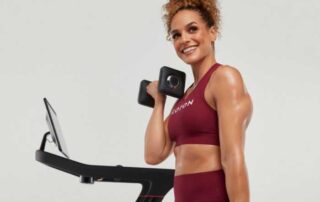

See original story on NEW YORK (WABC)
From Meniscus Surgery to Strength: How Dr. Riley J. Williams at HSS Helped Peloton Instructor Jess Sims Get Back to Doing What She Loves
When Peloton instructor, sports reporter, and host Jess Sims steps into a workout, it’s not just about the physical grind — it’s about the mindset. “Now’s the time to train that muscle in your mind,” she says. For Sims, movement is more than exercise; it’s empowerment, connection, and purpose.
But even the strongest athletes face setbacks. In December 2024, Sims underwent surgery for a torn meniscus — a common yet complex knee injury that can challenge even the most disciplined fitness professionals.
“I had surgery for a torn meniscus on December 11th, 2024,” she recalls. “It was a moment of pause, but also a chance to rebuild stronger.”
Understanding the Injury: Meniscus Tear
The meniscus is a C-shaped piece of cartilage in the knee that cushions and stabilizes the joint. Each knee has two menisci, medial and lateral, and when one detaches from the wall of the knee due to a twisting injury, surgical repair may be needed.
According to her surgeon at Hospital for Special Surgery (HSS) — the official hospital of the TCS New York City Marathon — Sims’ procedure involved reattaching the displaced meniscus to its natural position so the body could heal properly.
“The goal,” explains Dr. Williams, “was to restore stability and alignment, allowing her to return to movement safely.”
After Meniscus Repair, The Road to Recovery: Trusting the Process
For Sims, physical therapy became the cornerstone of her recovery. “PT is essential,” her therapist emphasized. “You’re not just teaching the body to move again, you’re teaching the mind to trust movement.”
At first, the rehab seemed simple. Small movements, controlled stretches, and guided exercises. But as strength returned, the real challenge began: trusting her body to perform again.
“I remember when Snay, my therapist, said, ‘You’re ready to run,’” Sims says with a laugh. “I couldn’t believe it. You have to trust the work you’ve put in, the hours of BFR sessions, the band work, the icing. The proof is in the consistency.”
Recovery wasn’t linear. “Sometimes you take three steps forward and six steps back,” she admits. “But HSS and Dr. Williams was there for me through every step, supporting the setbacks and celebrating the wins.”
The Dr. Williams and HSS Difference when it comes to knee surgery:
HSS is globally recognized for its excellence in orthopedic care and sports medicine. Their philosophy is clear: surgery is only one of many paths to healing.
“There’s an overarching philosophy at HSS,” says Dr. Williams. “If you can get better without surgery, we’ll tell you that. Our goal is always what’s best for the patient, whether that’s rehab, rest, or a surgical solution.”
The therapists and physicians at HSS are among the most experienced in the world, specializing in athletic recovery, joint preservation, and personalized physical therapy. Whether you’re a marathon runner or simply dealing with chronic knee pain, there’s an expert ready to help you move forward.
Back to the Start Line
Ten months post-surgery, Sims is back to doing what she loves, teaching, training, and inspiring others.
“That first running class back and that first boot camp hit different,” she says. “It was so empowering because I felt stronger than before. Dr Williams and HSS didn’t just help me recover, they helped me rebuild confidence.”
As the TCS New York City Marathon approaches, Sims has a message for runners everywhere:
“For those of you running your first marathon or your hundredth, enjoy every second. It’s a privilege, not a chore. Be present, be proud, and celebrate what your body can do. The work is already done. Now it’s time to enjoy the moment.”
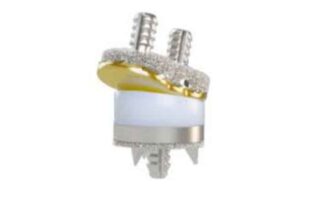
Meniscus Preserving Partial Knee Replacement Surgeon
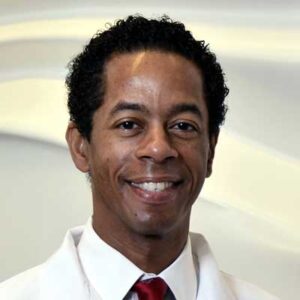
If you have arthritis in just one part of your knee, you may not need a total knee reconstruction or knee replacement. There is now an innovative procedure that replaces only part of the knee, while preserving the meniscus.
The OvertureTi implant is revolutionizing partial knee replacements. Uni-compartmental knee replacement surgeon, Riley Williams, MD helped develop the OvertureTi for patients who want to preserve their meniscus and avoid a total knee replacement in Manhattan, Brooklyn, New York City and the surrounding areas.
To see if you are a candidate for a meniscus preserving uni-compartmental knee replacement contact Dr. Williams’ team today!
Who is a candidate for meniscus preserving partial knee replacement?
Patients who suffer from early wear and tear arthritis (osteoarthritis) of the knee may be a candidate for meniscus preserving partial knee replacement. The knee joint has three compartments: the lateral (outer), the medial (inner), and the anterior (patellofemoral). Early arthritis is characterized by a loss of the articular cartilage at the ends of the thighbone (femur), lower leg (tibia) or kneecap (patella). The loss of articular cartilage results in pain and dysfunction in affected patients. Patients who have isolated arthritis in one of the three described compartments maybe a candidate for meniscus preserving partial knee replacement.
What are the symptoms of patient who are candidates for partial knee replacement?
Patients who are possibly eligible to undergo meniscus preserving partial knee replacement may have one or more of the following symptoms:
- Pain isolated to the inner, outer, or anterior knee
- Knee locking or catching
- Knee swelling
- Giving way or knee collapse
- Decreased capacity for walking or exercise
- Pain with deep squatting
How will Dr. Williams determine if I am eligible for meniscus preserving partial knee replacement?
Dr. Williams will most likely be able to diagnose isolated knee arthritis with a history and physical examination. He will ask questions regarding your pain and when it began. He may gently pull and press on your knee or ask you to squat, jump or lunge to test your knee strength and pain level. He will also evaluate your knee stability and range of motion. He will obtain x-ray of the knee to check for joint space loss. An MRI is typically ordered to verify the isolated nature of the arthritic condition.
What is a meniscus preserving partial knee replacement?
Partial knee replacement, also known as unicompartmental arthroplasty or partial knee resurfacing, describes a surgical procedure wherein the arthritic surfaces of the knee joint are covered with a thin metal implant. Most partial knee replacement are performed for isolated medial or lateral knee arthritis. The meniscus preserving partial knee replacement procedure replaces the worn down cartilage surfaces of the femur and tibia with size matched metal covers; the patient’s own meniscus tissue is preserved and left in place. A minimum of bone is taken during this procedure. The new surfaces of the partial knee replacement are smooth, and restore frictionless joint motion. Unlike total knee replacement, the remaining structure of the knee are not impacted by the procedure. As a result, patient undergoing meniscus preserving partial knee replacement experience significant pain relief. Meniscus preserving partial knee replacement patients ultimately have natural feeling knees that perform well with normal and athletic type activities. Dr. Williams recommends the Overture Knee Resurfacing System for these types of procedures.
What is the OvertureTi Knee Resurfacing System?
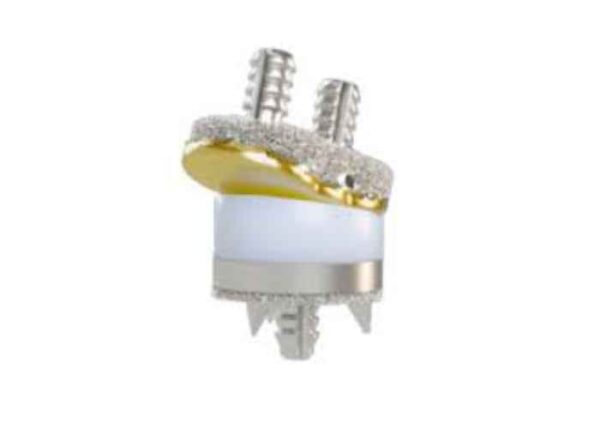
The OvertureTi Knee Resurfacing System is composed of femoral and tibial implants that are intended to be used in the partial replacement of the articular surfaces of the knee. These implants are designed with sizing options that allow Dr. Williams to replace only the diseased or damaged region of the joint while preserving healthy surrounding cartilage and meniscus. We refer to this technique of replacing only the affected areas and preserving healthy tissue as Focalplasty™.
What can I expect following partial knee replacement surgery?
Partial knee replacement surgery is performed on an out-patient basis, meaning most patients are admitted for surgery and go home the same day. Regional and local anesthesia are the norm for this type of procedure. Assistive walking devices (crutches, cane) are used for 5-7 days, after which, patient may increase their weight bearing according to their tolerance. Physical therapy starts one week after surgery, and continues for approximately 2 months following surgery. Cryotherapy should be used for the first month following surgery on a daily basis. Most patients report a return to full activities of daily living by 6-8 week after surgery, and some sports by 12 weeks.
For more information on partial knee replacement, unicompartmental arthroplasty, and partial knee resurfacing, please contact the office of Riley Williams, MD, orthopedic knee specialist serving Manhattan, New York City and the surrounding New York boroughs.
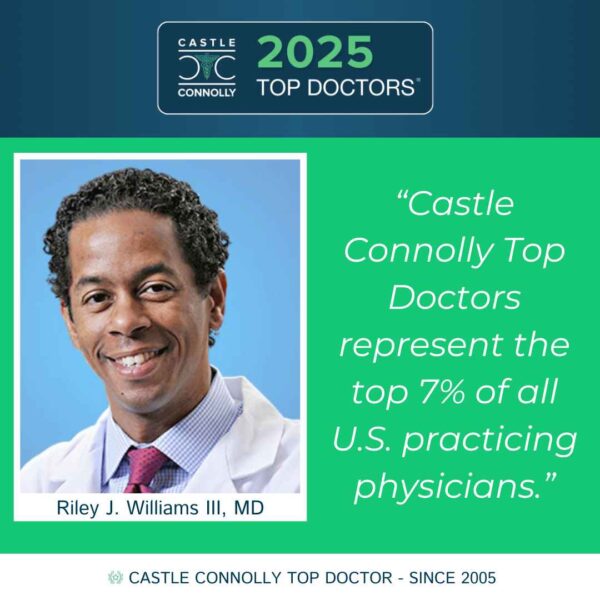
Riley J. Williams, III, MD is once again named as a Castle Connolly Top Doctor!
Receiving the Castle Connolly Top Doctor designation is a distinguished achievement that highlights Dr. Williams’ commitment to exceptional patient care, clinical expertise, and leadership in Orthopedic Surgery. This recognition is granted through a meticulous selection process involving peer nominations, thorough research, and a review of professional accomplishments. Dr. Williams is once again being honored with the title of Top Doctor, an award he has won 20 years in a row!
Congratulations, Dr. Williams, for being among the top 7% of practicing physicians in the United States!
You can see Dr. Williams’ Award here: Castle Connolly’s Top Doctors, 2025
 From The Hospital for Special Surgery (HSS) Via Instagram:
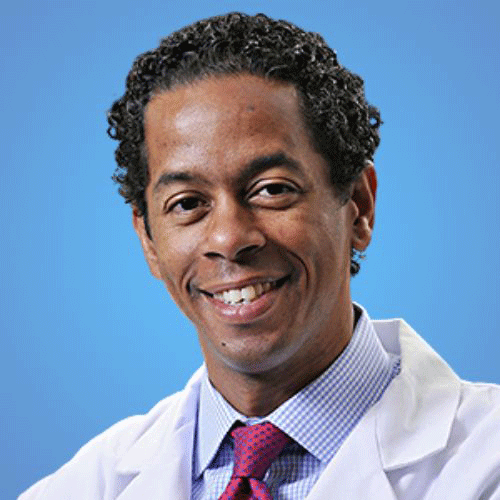
A trailblazer in sports medicine, Dr. Williams specializes in knee, shoulder, and elbow surgery, with a focus on knee ligament repair and cartilage reconstruction after sports-related and orthopedic injuries. He performed the first knee cartilage transplantation in New York at HSS in 1998. He is also a trusted medical expert for elite athletes and professional teams worldwide, serving as Medical Director and Head Team Orthopedic Surgeon for the Brooklyn Nets, New York Liberty, and New York Red Bulls MLS. He also leads the FIFA Medical Center of Excellence at HSS and was recently appointed the New York Chief Venue Medical Officer for the FIFA World Cup in 2026.
Dr. Williams is honored, humbled and excited about this very prestigious role:
“I’m incredibly honored, humbled and excited to step into this new role,” said Dr. Williams, “It is a career milestone, and I owe a deep debt of gratitude to my peers and colleagues for their profound influence over the years.”
Highlights from Business Wire:
Focus on Fostering Greater Collaboration:
Leading a multidisciplinary team of more than 60 clinicians across HSS locations in New York, Connecticut, New Jersey and South Florida, Dr. Williams will focus on fostering greater collaboration among sports medicine surgeons and physicians, with the goal of taking patient outcomes, research and education to new heights.
HSS is Home to the World’s Greatest Talent:
“The HSS Sports Medicine Institute is home to the world’s greatest concentration of talent in the field. Dr. Williams is the right leader for their next chapter,” said Bryan T. Kelly, MD, MBA, HSS President & CEO. “His passion for performance, recovery and collaborative care will help the future of sports medicine and deliver outstanding results for our patients.”
Dr. Williams, Outstanding in Orthopedic Sports Medicine and Surgery:
Dr. Williams attended Yale University and is a graduate of the Stanford University School of Medicine. He then completed his residency in Orthopedic Surgery and a fellowship in Sports Medicine and Shoulder Surgery at HSS, before starting his practice. Dr. Williams has published over 141 peer-reviewed research papers over his career. With hundreds of invited lectureships and several notable teaching awards over his career, he is widely regarded as a key opinion leader in the field of Sports Medicine.
Dr. Williams is a member of the American Academy of Orthopedic Surgeons, the American Orthopaedic Society for Sports Medicine, the International Cartilage Regeneration and Joint Preservation Society, the Orthopaedic Research Society, American Shoulder and Elbow Surgeons and the NBA Physicians Association.
See full press release on Businesswire
Congratulations Dr. Riley J. Williams, III!
Special congratulations to Dr. Williams for being appointed to one of the most prestigious positions in the Sports Medicine world!




Dr. Riley Williams was recently named as the Venue Chief Medical Officer for the FIFA World Cup 2026
Dr. Williams will be a key member of the FIFA26 Medical Services team, and work in close collaboration with the Medical Tournament Lead and other key individuals responsible for delivering the medical services designed to provide rapid access to emergency care in time-critical situations by a combination of healthcare professionals and ambulances covering venues, events and participant groups on-site or stationed remotely.